Supporting families to feel confident and informed as they navigate early childhood settings
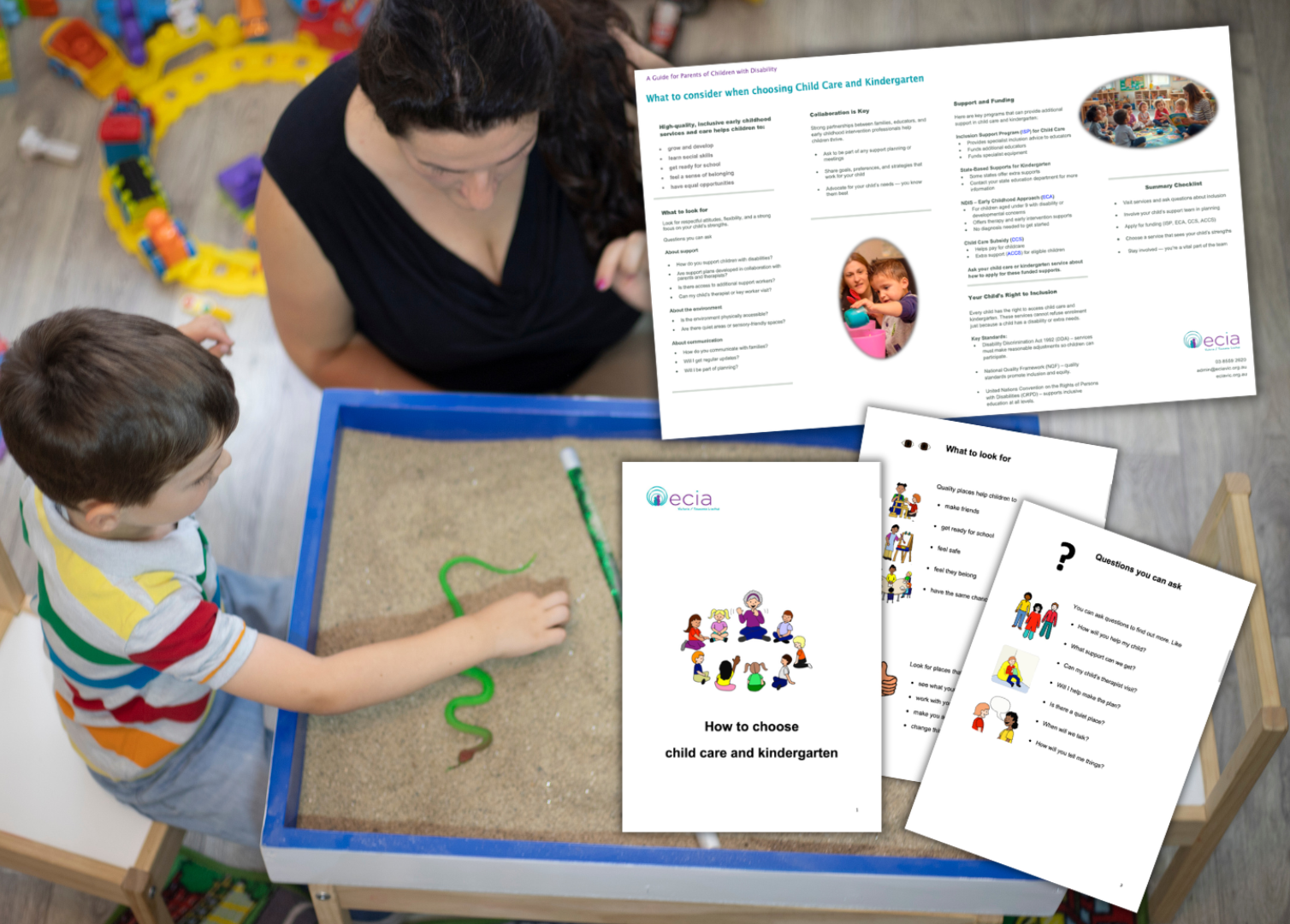
To help families navigate the process of choosing childcare or kindergarten with greater confidence, we have developed two new practical guides. We encourage you to download them, share them with families you are working with, and use them as a starting point for these conversations.
The guides help families understand what genuine inclusion looks like in practice and gives them the language and confidence to ask the right questions when visiting or enrolling at a service.
Families may ask about how services support children with disabilities, whether their child's therapist or key worker can visit, how to communicate with families, and whether the environment includes sensory-friendly or quiet spaces.
These are exactly the kinds of questions that demonstrate a service's commitment to inclusion, and to build trust with families from the very first conversation.
Funding and additional supports
The guides also outline the key funding and support programs available to children and families, many of which work best when educators and families apply and plan together.
- Inclusion Support Program (ISP): a service can apply for specialist inclusion advice, additional educators and specialist equipment; start the conversation early with families so you can plan together.
- State-based kindergarten supports: additional staffing, training and equipment may be available depending on your state; encourage families to ask you about this at enrolment.
- NDIS Early Childhood Approach: for children aged under 9 with disability or developmental concerns; no diagnosis is needed to get started, and you can help connect families with their local Early Childhood Partner.
- Child Care Subsidy (CCS) and Additional Child Care Subsidy (ACCS): government funding to help with the cost of childcare; encourage eligible families to apply through myGov or contact Centrelink.
Reinforcing families' rights
The guides clearly explain to families that services cannot refuse to enrol a child simply because they have a disability or diverse needs. Sharing this information openly and proactively signals a service takes its obligations seriously and is genuinely committed to inclusion, not just in principle, but in practice.
Under the Disability Discrimination Act 1992, services are required to make reasonable adjustments so all children can participate. The National Quality Framework reinforces that quality services must actively promote inclusion and equity for every child.
Two formats to suit different families
The resources are available in two formats allowing all families access to the resources. Both are free to download and share, and we encourage you to keep copies on hand for enrolment conversations, family meetings and transition planning.
- What to Consider When Choosing Child Care and Kindergarten is a comprehensive guide covering inclusion indicators, questions to ask, funding pathways, legal rights and a practical summary checklist. Ideal for families who want detailed information to refer back to.
- How to Choose Child Care and Kindergarten (Easy English) presents the same essential information in Easy English with clear language and visual supports, making it accessible for families who prefer a straightforward format or for whom English is an additional language.
If you have questions about supporting a child with disability or developmental concerns in your service or would like to find out more about the resources and supports available to you, please contact our team on 03 8559 2620 or at [email protected].
We're stronger together. Consider joining ECIA VIC/TAS as a member to unlock exclusive resources and materials to help you deliver quality early childhood supports.