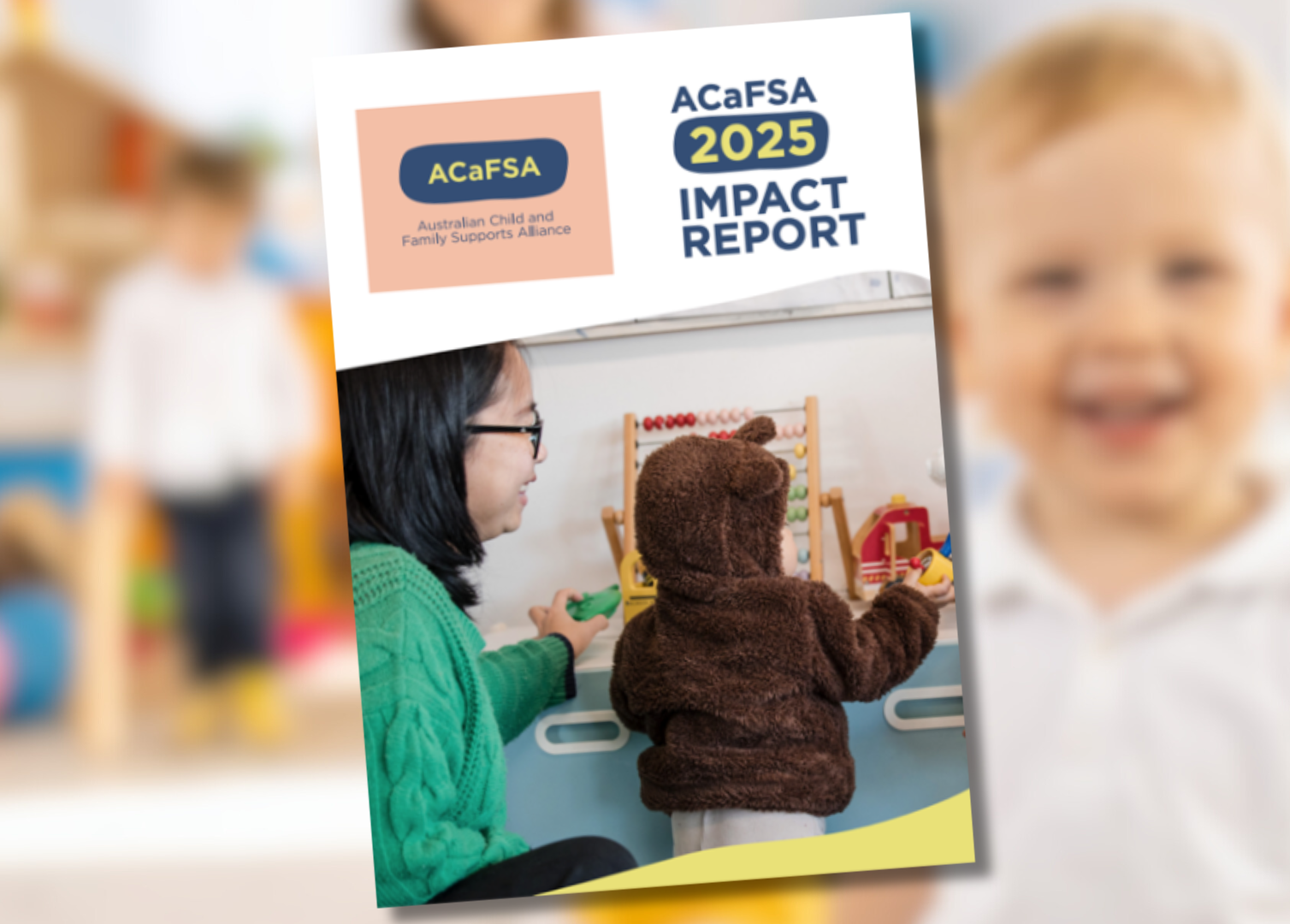
Read ACaFSA's 2025 Impact Report: Shaping better outcomes for Australian children
Australia's early childhood support system is complex, fragmented and for many families, difficult to navigate. For children aged 0–9 living with developmental concerns, delays, disabilities or differences, the stakes are especially high. The right support at the right time in those critical early years can make a profound difference to a child's trajectory.
That is the driving purpose behind the Australian Child and Family Supports Alliance (ACaFSA) – a national collaborative of leaders and subject matter experts working to ensure every child and family can access an integrated, inclusive and effective support system, wherever they live in Australia.
ACaFSA provides strategic advice, sector leadership and system-level influence to support the design and implementation of a truly joined-up child and family support system across Australia. It is not a single organisation; it is a national movement of shared purpose, bringing together expertise from early childhood intervention, disability, peer support, child and family services, education, health, research and peak bodies to drive collaboration, evidence-informed policy and system reform.
The alliance currently spans 54 member organisations (including ECIA VIC/TAS) and 70 individual members, with representation across all eight Australian states and territories.
2025 Impact Report: a year of progress
ACaFSA's newly released 2025 Impact Report captures a significant year of growth across national collaboration, policy influence and governance. It brings together insights from across the alliance's work in 2025, highlights the benefits of working together, and combines the voices of all services working with children and families. It also looks ahead to what ACaFSA plans to focus on in 2026.
In 2025, ACaFSA's work was organised around four strategic priorities:
Information exchange and national collaboration
ACaFSA deepened sector connectivity through fortnightly national member meetings, a national online forum in June 2025, and active collaboration with state alliances including VCaFSA, SAEFSA, CAFSA NSW and the WA Collaborative. The result was stronger cross-jurisdiction alignment, reduced fragmentation and improved shared understanding around inclusion and foundational supports.
Policy influence and systems reform
ACaFSA cemented its role as a national policy influencer, hosting the Thriving Kids Parliamentary Friends Forum in Canberra in October 2025, leading workforce strategy discussions, and engaging directly with the Office of Minister Butler. National submissions were made to the Thriving Kids inquiry, and ACaFSA participated in the Disability Support Ecosystem safeguarding reform consultation — ensuring the voices of children, families and early childhood services informed major national reforms.
Enabling collaborative work
ACaFSA ran the NDIA Advocacy Working Group and a time-limited NDIS Travel Working Group, and developed a Foundational Supports Theory of Change alongside shared national insights papers. This coordinated advocacy enabled collective action to influence national disability and child support systems.
Strengthening governance
ACaFSA established a formal membership model, secured secretariat support through The Front Project, developed a draft Terms of Reference, and created a shared key messaging framework for unified advocacy. These steps created a clearer, more sustainable alliance structure with greater cohesion, transparency and strategic alignment.
Looking ahead to 2026
ACaFSA enters 2026 with stronger foundations and greater national reach. Its priorities for the year ahead include:
- Continuing to strengthen governance and national coordination.
- Advancing systems reform through collaborative policy leadership.
- Deepening cross-jurisdiction collaboration between state and territory alliances.
- Expanding influence across early childhood, disability and family support systems.
- Delivering a strategic action plan aligned to national priorities.
Through collective leadership and shared commitment, the alliance continues to play a critical role in shaping an integrated, inclusive and effective system for children and families across Australia.